
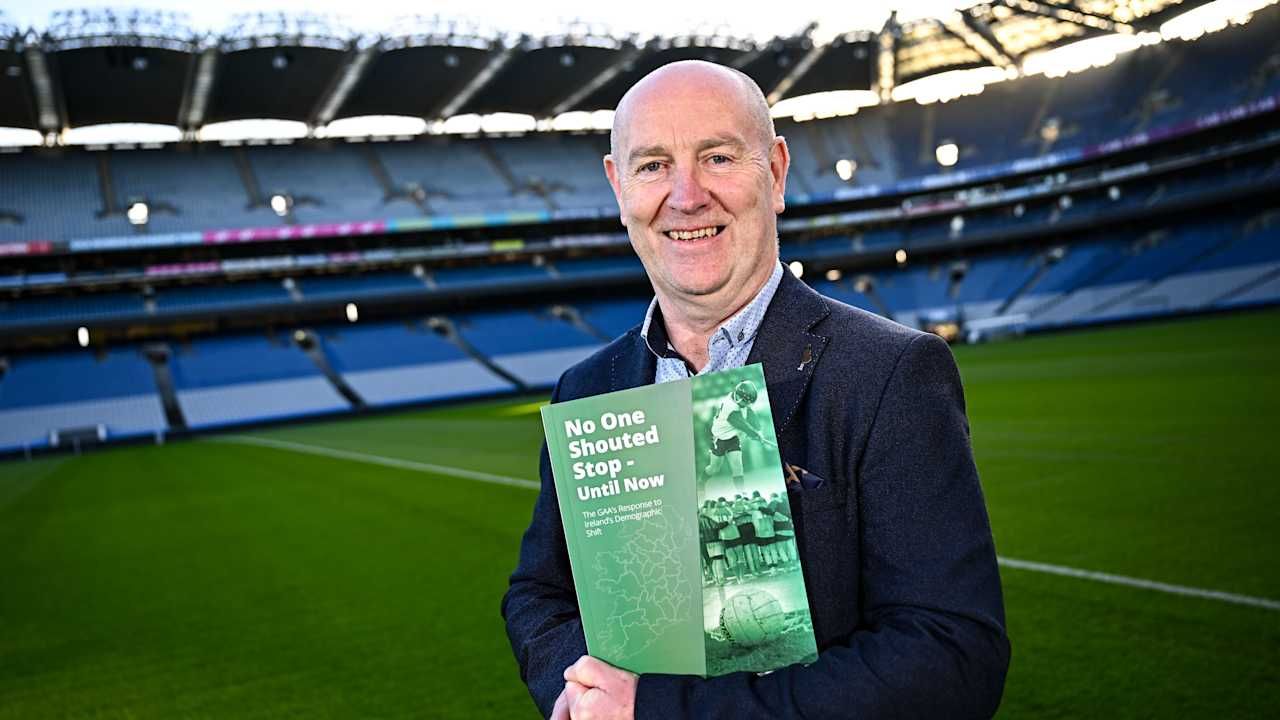
No One Shouted Stop – Until Now: A Reflection on the GAA’s Demographic Report – by Ciaran Deely PhD
Dec 06, 2025The GAA’s new report, No One Shouted Stop – Until Now, is the most direct and data-driven acknowledgement yet of how Ireland’s changing population is reshaping the Association. It pulls together census data, Foireann membership trends, and demographic projections to give a clear picture of where Gaelic Games are thriving, where they’re under pressure, and where the biggest challenges lie for the decades ahead.
The main message is straightforward: demographics will influence the next fifty years of Gaelic Games more than any coaching programme, rule change, or strategic plan. And we now have the evidence to see that clearly.
What the Report Is
The report sets out where Ireland’s population is growing, where it is declining, and how this compares with the spread of GAA clubs. The imbalance is striking:
• Ireland’s population has passed 7 million
• Almost one-third of the population now lives within an hour of Dublin
• Yet only 18% of GAA clubs are located in these high-growth areas
Meanwhile, many rural regions continue to experience falling numbers of young families and fewer children entering the system. The report doesn't dramatise these shifts — it simply presents them with clarity and invites the Association to think differently about club structures and long-term planning.
Key Findings
1. Population Imbalance
The east of the country continues to grow rapidly, while large parts of the west, midlands, and border counties face slow growth or decline. This creates obvious mismatches between demand and capacity.
2. The 0–5 Age Group as the Real Indicator
One of the clearest metrics in the report:
• Approximately 50 clubs hold 25% of all 0–5-year-olds in Ireland
• Roughly 1,000 clubs share only 22% of this same age group
This alone predicts future participation patterns, volunteer numbers, and club sustainability.
3. Urban Clubs Under Real Pressure
Urban clubs are now dealing with:
• memberships above 1,200, with some exceeding 5,000
• limited pitch access
• volunteer burnout
• children not getting adequate playing opportunities
In Dublin, the majority of full-sized pitches used by clubs are controlled by councils, not by the clubs themselves — a major challenge for long-term planning.
4. Rural Clubs Facing Structural Challenges
Rural areas continue to experience:
• declining birth rates
• school closures or consolidations
• reduced housing availability for young families
• difficulty fielding full teams at multiple age levels
Many already rely on independent teams or amalgamations.
5. Migration as a Key Variable
Some counties now depend on international migration for 70%+ of their population growth. Yet migrant families remain underrepresented in GAA involvement. This is both a gap and a significant opportunity.
What the Report Recommends
The recommendations fall under three broad headings.
Internal Actions
• More flexible club structures
• New clubs in high-growth urban areas
• Pilot schemes in counties such as Kerry and Kildare
• Smaller-sided formats (11-a-side, 9-a-side) where appropriate
• A national facilities strategy matching demographic need
• A Club Support Unit to help clubs navigate change
• Competition tiers aligned to club size and player numbers
• County-specific byelaws to reflect local realities
External Engagement
The GAA recognises the need for stronger partnerships with:
• government departments
• local authorities
• planning and zoning bodies
• schools
This includes conversations about land access, shared facilities, and long-term development planning.
Evidence-Informed Strategy
A move towards:
• ongoing demographic monitoring
• predictive modelling
• data-driven planning
• structured policy development
This marks a shift from reaction to long-term preparation.
My Reflections – What This Means in Practice
The report simply confirms what coaches, volunteers, and administrators have been seeing for years.
• In rural clubs, small underage panels reflect long-term population decline.
• In urban clubs, overcrowding and lack of facilities reflect rapid population growth.
• Across both, there is still work to do in embracing an increasingly diverse Ireland.
The key point is this: demographics are structural.
We cannot coach our way out of population decline.
We cannot rely solely on volunteerism to solve overcrowding or lack of facilities.
And we cannot depend on tradition alone to ensure future participation.
For the GAA to meet these challenges, three priorities stand out.
1. Courageous leadership
Decisions must reflect demographic reality, even when they challenge long-held practices.
2. A real national facilities plan
Urban clubs need access to land and pitches that match their membership numbers. Rural clubs need sustainable structures matched to their community size.
3. A wider and more intentional engagement with new communities
Ireland is changing. Gaelic Games must reflect that change if the Association is to thrive over the long term.
Final Thought
The report’s title — No One Shouted Stop – Until Now — is a reminder that demographic trends do not reverse themselves. The evidence is now clear and accessible. What matters next is how the Association responds.
If the GAA follows through with structured, data-led, long-term action, it can adapt and strengthen itself for the next generation. The organisation has weathered major transitions in the past; it can navigate this one too — provided the response is coordinated, realistic, and forward-looking.
*You can access the full report here and download it as a PDF file https://www.gaa.ie/article/time-to-change-the-narrative-on-demographics-challenge
